 EN

what-factors-affect-outdoor-led-strip-lights, what-factors-affect-outdoor-led-strip-lights, /technical-insights
EN
When selecting outdoor lighting solutions for your property, understanding what factors affect outdoor led strip lights is essential for making informed decisions. Outdoor led strip lights have become increasingly popular for landscape design, architectural accent lighting, and ambient outdoor spaces. However, not all outdoor led strip lights perform equally, and several critical factors determine their effectiveness, longevity, and overall value. This guide explores the key considerations that influence performance and reliability.
Weatherproof led strip lights require careful evaluation of environmental resistance and build quality to ensure they withstand demanding outdoor conditions. The durability and functionality of exterior led tape lights depend on multiple interconnected factors that work together to define the product's suitability for specific applications. By understanding these factors, property owners and designers can select lighting solutions that deliver reliable performance season after season.
The IP rating is one of the most critical factors affecting outdoor led strip lights performance and longevity. IP ratings indicate the level of protection against dust and water ingress, with higher ratings providing superior protection. For exterior led tape lights, an IP65 or higher rating ensures resistance to dust and low-pressure water jets, making them suitable for most outdoor environments. IP67 or IP68 ratings offer even greater protection, allowing submersion or continuous exposure to moisture. Without adequate weatherproof led strip lights specifications, your investment may fail prematurely when exposed to rain, humidity, or irrigation systems. The first digit in the IP rating represents dust protection, while the second indicates water resistance, and both factors influence outdoor lighting solutions' reliability.
The materials used in constructing outdoor led strip lights directly impact their ability to withstand environmental stress. High-quality silicone casings provide superior flexibility and protection compared to standard PVC, which can become brittle in extreme temperatures. Aluminum or stainless steel housing resists corrosion better than plastic alternatives, particularly in coastal or high-humidity regions where salt spray accelerates degradation. The adhesive backing on weatherproof led strip lights must remain intact despite temperature fluctuations, UV exposure, and moisture penetration. Material durability becomes even more critical for exterior led tape lights installed in regions with dramatic seasonal changes, frequent rainfall, or intense sun exposure. Investing in premium materials ensures your outdoor lighting solutions maintain their integrity and performance throughout their operational lifespan.
Brightness requirements for outdoor led strip lights vary based on application, mounting height, and ambient lighting conditions. Lumen output measured in lumens per meter directly affects the visual impact and effectiveness of your outdoor lighting solutions. For ambient lighting around patios or deck edges, 300–500 lumens per meter typically provides adequate visibility without creating glare. Accent lighting applications may require brighter options, while decorative outdoor led strip lights can function effectively at lower brightness levels. The perceived brightness also depends on color temperature, with warm white light appearing softer and cool white light appearing brighter at identical lumen ratings. When evaluating weatherproof led strip lights, compare lumen output specifications at the intended operating voltage and temperature to ensure realistic performance expectations.
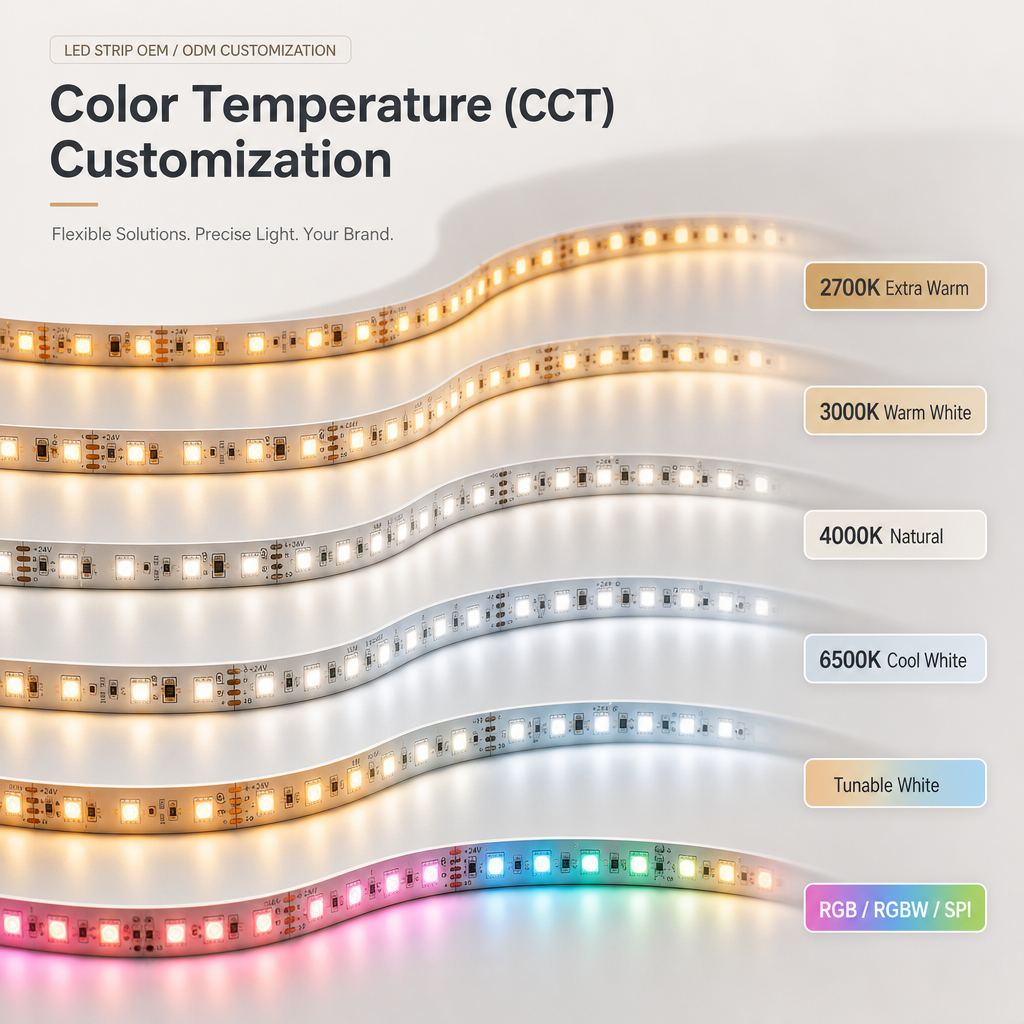
Color temperature significantly influences the ambiance and perception of exterior led tape lights in your landscape. Warm white light between 2700K and 3000K creates inviting, residential-friendly atmospheres suitable for patios and garden areas. Cool white light between 5000K and 6500K provides superior visibility and security benefits, making it ideal for pathways and entryways. RGB color-changing outdoor lighting solutions offer flexibility but require controller compatibility and additional power considerations. Color rendering index (CRI) values above 80 ensure that outdoor led strip lights display colors accurately, which matters when illuminating plants, architectural features, or decorative elements. The interplay between brightness and color temperature defines how your outdoor lighting solutions integrate with landscape design and functional requirements.
The power supply chosen for outdoor led strip lights affects both safety and functionality in your outdoor lighting solutions. Low-voltage systems typically operate at 12V or 24V, requiring transformers but offering enhanced safety for wet environments and reduced shock hazard. High-voltage systems operate directly from household current but demand professional installation and pose greater safety risks in moisture-prone areas. Power consumption varies based on LED density, brightness settings, and control options, influencing operating costs over time. Weatherproof led strip lights with smart controls enable dynamic adjustment of brightness and color, optimizing energy efficiency while enhancing functionality. Selecting the appropriate voltage and power architecture ensures your exterior led tape lights operate reliably while maintaining compatibility with existing landscape electrical systems and safety standards.
The surface and method of installation significantly affect outdoor led strip lights performance and aesthetic integration. Proper surface preparation, including cleaning and priming, ensures the adhesive backing bonds effectively to outdoor lighting solutions mounting surfaces. Aluminum channels and diffusers protect weatherproof led strip lights from direct impact while improving light distribution and reducing glare. Flexible vs. rigid mounting requirements vary based on project specifications, with curved applications demanding flexible exterior led tape lights and straight architectural features benefiting from rigid alternatives. Installation in areas prone to vibration, thermal cycling, or physical stress requires mechanical fasteners in addition to adhesive backing. Professional installation or careful attention to manufacturer specifications ensures your outdoor lighting solutions achieve optimal performance and integration with surrounding architecture and landscape elements.
Quality outdoor led strip lights typically last between 30,000 and 50,000 hours depending on build quality, operating conditions, and usage patterns. This translates to approximately 3–5 years of continuous operation or 10–15 years with typical seasonal use. Weatherproof led strip lights with superior thermal management and component quality often exceed these estimates, while budget options may fail sooner. Regular maintenance, proper installation, and adherence to manufacturer specifications help maximize the lifespan of your exterior led tape lights and outdoor lighting solutions.
Only outdoor lighting solutions specifically rated for submersion, such as IP68-rated outdoor led strip lights, should be installed in water features. Standard weatherproof led strip lights with IP65 or IP67 ratings resist water spray but cannot safely function submerged. Always verify manufacturer specifications and consult professional electricians before installing exterior led tape lights near pools, fountains, or other bodies of water to ensure safety compliance.
Regular maintenance of weatherproof led strip lights includes periodic cleaning to remove dust and debris that can reduce brightness and trap moisture. Inspect adhesive bonds and mechanical fasteners seasonally, particularly in regions with extreme temperature swings or severe weather. Check power connections and controllers for corrosion, and verify that exterior led tape lights remain properly secured and undamaged. Most outdoor lighting solutions require minimal maintenance when properly installed, but seasonal inspections help identify issues before they compromise safety or functionality.
